St. Francis of Assisi Weekly Reflections

Out of Egypt I Called My Son
12-28-2025Weekly ReflectionWe Celebrate Worship Resource, Vol. 49, No. 1The Gospel for today skips ahead a bit to tell what happens after next Sunday's Gospel. Next Sunday, on Epiphany, we hear the magi inadvertently tip off Herod to the birth of the king of the Jews. Today, we hear the angel of the Lord warn Joseph that because of Herod's murderous plans, the Holy Family must flee to Egypt.
Keep in mind that they are already away from home, having left Galilee for the census. Now they face a perilous journey to a foreign country where they don't know anyone, don't know the language, have no place to stay, hardly any possessions, and no idea how long they will need to stay there. But, then as now, parents will sacrifice just about anything for their children.
So in the dark of night, Mary and Joseph flee their homeland with their newborn child. They may have no money or possessions, but they have the virtues Paul calls upon the Colossians to exercise: patience, humility, gentleness, kindness, compassion, forgiveness, thankfulness, and love. Unlike material goods, these increase as they are used.
May the Holy Family strengthen these virtues in us, helping us to see families who struggle today as holy families as well. Of the virtues Saint Paul lists, which one do you find it most difficult to exercise? Why? How can this improve?
-We Celebrate Worship Resource, Vol. 51, No. 1
De Egypto Llamé a Mi Hijo
El Evangelio de hoy se adelanta un poco para narrar lo que sucede después del próximo domingo. El próximo domingo, en la Epifanía, cuando los Reyes Magos, sin querer, revelan a Herodes el nacimiento del rey de los judíos. Hoy, escuchamos al ángel del Senor advertir a Jose que, debido a los planes asesinos de Herodes, la Sagrada Familia debe huir a Egipto.
Recordemos que ya se encontraban lejos de casa, habiendo partido de Galilea para el censo. Ahora se enfrentan a un viaje peligroso a un país extranjero donde no conocen a nadie, no hablan el idioma, no tienen dónde alojarse, apenas poseen pertenencias y desconocen cuánto tiempo deberán permanecer allí. Pero, entonces como ahora, los padres están dispuestos a sacrificarlo casi todo por sus hijos.
Así, en la oscuridad de la noche, María y Jose huyen de su tierra natal con su hijo recién nacido. Quizás no tengan dinero ni posesiones, pero poseen las virtudes que Pablo exhorta a los colosenses a practicar: paciencia, humildad, mansedumbre, bondad, compasión, perdón, gratitud y amor. A diferencia de los bienes materiales, estas virtudes crecen con el uso.
Que la Sagrada Familia fortalezca estas virtudes en nosotros, ayudandonos a ver tambien a las familias que hoy luchan como sagradas familias. De las virtudes que enumera San Pablo, ¿cuál te resulta más difcil practicar? ¿Por que? ¿Como se puede mejorar en este aspecto?
-We Celebrate Worship Resource, Vol. 51, No. 1
Respect for Elders
12-28-2025Question of the Week| Reading I | Duties Toward Parents - Sirach 3:3-7, 14-17a |
| Reading II | The Practice Of Virtues - Colossians 3:12-21 |
| Gospel | The Finding In The Temple - Matthew 2:13-15, 19-23 |
| Key Passage: Jesus went down with them and came to Nazareth, and was obedient to them. (Luke 2:51a) | |
| Adult: What does your family do to honor and respect its older members? | |
| Kids: Why did Joseph leave Israel? How can he be an example for you? |
Respeto a Los Mayores
| Lectura I | Deberes hacia los padres - Eclesiástico 3:3-7, 14-17a |
| Lectura II | La práctica de las virtudes - Colosenses 3:12-21 |
| Evangelio | El hallazgo en el templo - Mateo 2:13-15, 19-23 |
| Pasaje clave: Entonces Jesús volvió con sus padres a Nazaret, y los obedecía en todo. (Lucas 2:51a) | |
| Adultos: ¿Que hace tu familia para honrar y respetar a sus miembros mayores? | |
| Niños: ¿Por qué José dejó Israel? ¿Cómo puede ser un ejemplo para ti? |

God is With Us
12-21-2025Weekly ReflectionWe Celebrate Worship Resource, Vol. 49, No. 1On this day that follows the longest night of the year, as an ever- increasing amount of light begins to dawn, we hear of two men of the house of David who face momentous decisions. The light dawns for one, but not for the other. The Lord offers Ahaz, king of Judah, a sign, but he refuses to place his faith in God.
Isaiah's prophecy that the Lord will present a sign in the form of a virgin who will bear a son called Emmanuel, "God is with us," falls on deaf ears. Centuries later, Joseph, after finding out that his betrothed is pregnant and not by him, intends to divorce her. But the angel of the Lord comes to him and tells him that his betrothed, Mary, is the virgin who will fulfill the prophecy Isaiah told, a prophecy Joseph certainly knows well, a prophecy whose fulfillment he certainly has longed for, but a prophecy he must have found difficult to believe he will witness himself.
Still, Joseph places his faith in God, taking Mary into his home and giving her child the name of Jesus. Because Mary and Joseph each place their faith in God, a new day with God's indwelling and our salvation dawns for us all.
When have you put your faith in God even when it seemed unrealistic?
-We Celebrate Worship Resource, Vol. 51, No. 1
Dios Con Nosotros
En este día que sigue a la noche más larga del año, mientras la luz se hace cada vez más intensa, oímos hablar de dos hombres de la casa de David que se enfrentan a decisiones trascendentales. La luz amanece para uno, pero no para el otro. El Señor ofrece una señal a Ajaz, rey de Judá, pero este se niega a confiar en Dios.
La profecía de Isaías de que el Señor presentaría una señal en forma de una virgen que daría a luz un hijo llamado Emmanuel, "Dios con nosotros", cae en oídos sordos. Siglos después, José, tras descubrir que su prometida está embarazada y no es de él, pretende divorciarse de ella. Pero el ángel del Señor se le acerca y le anuncia que su prometida, María, es la virgen que cumplirá la profecía de Isaías, una profecía que José sin duda conoce bien, una profecía cuyo cumplimiento sin duda anhelaba, pero una profecía que seguramente le costaba creer que presenciaría él mismo.
Aun así, José depositó su fe en Dios, acogiendo a María en su hogar y dándole a su hijo el nombre de Jesús. Gracias a que María y José depositaron su fe en Dios, un nuevo día con la morada de Dios y nuestra salvación amanece para todos nosotros.
¿Cuándo has puesto tu fe en Dios incluso cuando parecía poco realista?
-We Celebrate Worship Resource, Vol. 51, No. 1
Actions Worthy of Praise
12-14-2025Question of the Week| Reading I | Israel's Deliverance - Isaiah 35:1-6a, 10 |
| Reading II | Patience - James 5:7-10 |
| Gospel | Christ's Witness To John - Matthew 11:2-11 |
| Key Passage: Jesus said, "Truly I tell you, among those born of women no one has arisen greater than John the Baptist; yet the least in the kingdom of heaven is greater than he." (Matthew 11:11) | |
| Adult: How do you prepare yourself to meet Christ in those around you? | |
| Kids: What good thing have you done so far during Advent to be like Jesus? |
Acciones Dignas de Alabanza
| Lectura I | La liberacion de Israel - Isaías 35:1-6a, 10 |
| Lectura II | Paciencia - Santiago 5:7-10 |
| Evangelio | El testimonio de Cristo a Juan - Mateo 11:2-11 |
| Pasaje clave: Jesús dijo: "Yo les aseguro que no ha surgido entre los hijos de una mujer ninguno mas grande que Juan el Bautista. Sin embargo, el más pequeño en el Reino de los cielos, es todavía más grande que él" (Mateo 11:11). | |
| Adultos: ¿Cómo te preparas para encontrarte con Cristo en quienes te rodean? | |
| Niños: ¿Que has hecho bien durante el Adviento para ser como Jesús? |

Eyes of Faith
12-14-2025Weekly ReflectionWe Celebrate Worship Resource, Vol. 49, No. 1With eyes of faith, Isaiah sees flowers in the desert, vigor in those who are infirm, and joy banishing sorrow. With eyes of faith, James remains steadfast waiting for the Lord's return, despite what seems to be a lengthy delay. With eyes of faith, John the Baptist prepares the way for the Messiah, as we heard last week. But in prison, John's eyes have dimmed. He cannot see what his disciples see: the lame walking the deaf hearing, the blind seeing, and the dead living.
Our eyes may dim as well and we may fain to see the joy around us. Not the joy of Christmas parties, music, and decorations, which are difficult to ignore, but a deeper joy that is anchored in hope, a hope that persists despite the hardships in our lives and in the world. Our hope is in Christ, the light in the darkness, who comes to us when we most need him, leading us to a kingdom of eternal life.
On this Gaudete ("Rejoice") Sunday, as the Jubilee Year of Hope approaches its end, may we take to heart the words we hear in the second reading: "the coming of the Lord is at hand" (James 5:8). Not only on Christmas Day, but on every day, the Lord is ready to burst into our lives. May our eyes of faith be clear and bright to see him.
What are you able to see with eyes of faith that others can't or vise versa?
-We Celebrate Worship Resource, Vol. 51, No. 1
Ojos de Fe
Con ojos de fe, Isaías ve flores en el desierto, vigor en los enfermos y alegría que disipa la tristeza. Con ojos de fe, Santiago permanece firme esperando el regreso del Señor, a pesar de lo que parece una larga demora. Con ojos de fe, Juan el Bautista prepara el camino para el Mesías, como escuchamos la semana pasada. Pero en prisión, la mirada de Juan se ha apagado. No puede ver lo que ven sus discípulos: los cojos que caminan, los sordos de corazón, los ciegos que ven y los muertos que viven.
Nuestra mirada tambien puede apagarse y ansiamos ver la alegría que nos rodea. No la alegría de las fiestas navideñas, la música y las decoraciones, que son difíciles de ignorar, sino una alegría más profunda, anclada en la esperanza, una esperanza que persiste a pesar de las dificultades de nuestra vida y del mundo. Nuestra esperanza está en Cristo, la luz en la oscuridad, que viene a nosotros cuando más lo necesitamos, guiándonos a un reino de vida eterna.
En este Domingo de Gaudete ("Alégrense"), al acercarse el fin del Ano Jubilar de la Esperanza, tomemos en serio las palabras de la segunda lectura: "La venida del Señor está cerca" (Santiago 5:8). No solo el día de Navidad, sino todos los días, el Señor esta listo para irrumpir en nuestras vidas. Que nuestros ojos de fe sean claros y brillantes para verlo.
¿Que eres capaz de ver con los ojos de la fe que otros no pueden o viceversa?
-We Celebrate Worship Resource, Vol. 51, No. 1

Repent!
12-07-2025Weekly ReflectionWe Celebrate Worship Resource, Vol. 49, No. 1Isaiah's vision of the world after the Messiah comes sounds like the Garden of Eden, where all God's creatures lived in peace and harmony. Try to imagine a lamb inviting a wolf to visit, a young goat lying down placidly with a leopard, and a baby playing with a cobra! Only in Eden or in heaven, right? Not since the fall of humanity could such a scene have taken place here on earth. But Isaiah says it will happen again.
The dream of returning to an earlier time when your life, the world around you, or indeed the entire world was in a far better place is an alluring one. And it is not impossible. John the Baptist tells us how: "Repent, for the Kingdom of heaven is at hand!" (Matthew 3:2). Repentance turns back the clock. Repentance return us to a sinless, idyllic state.
Repentance leads us to the kingdom, which is truly at hand, as much now as it was two thousand years ago, for Jesus is still with us, still calling us to repentance. O come, Emmauel-"God with us" - lead us to your holy mountain, free from harm and ruin, to a place of peace and harmony. Of what do you repent today to try to bring peace and harmony to your life?
-We Celebrate Worship Resource, Vol. 51, No. 1
¡Arrepiéntanse!
La visión de Isaías sobre el mundo después de la venida del Mesías se asemeja al Jardín del Edén, donde todas las criaturas de Dios vivian en paz y armonía. Imagínense un cordero invitando a un lobo, una cabra joven descansando plácidamente junto a un leopardo, iy un bebe jugando con una cobra! Solo en el Edén o en el cielo, ¿verdad? Desde la caída de la humanidad, tal escena no podría haber ocurrido aquí en la Tierra. Pero Isaías dice que volverá a suceder.
El sueño de regresar a un tiempo anterior, cuando nuestra vida, el mundo que nos rodea, o incluso el mundo entero, eran mucho mejores, es tentador. Y no es imposible. Juan el Bautista nos lo explica: "¡Arrepiéntanse, porque el Reino de los cielos está cerca!" (Mateo 3:2). El arrepentimiento nos hace retroceder en el tiempo. El arrepentimiento nos devuelve a un estado idílico y sin pecado.
El arrepentimiento nos conduce al reino, que está verdaderamente cerca, tanto ahora como lo estaba hace dos mil años, porque Jesús sigue con nosotros, llamándonos al arrepentimiento. Oh, ven, Emanuel-"Dios con nosotros"-, guíanos a tu monte santo, libre de daño y ruina, a un lugar de paz y armonía. ¿De que te arrepientes hoy para intentar traer paz y armonía a tu vida?
-We Celebrate Worship Resource, Vol. 51, No. 1
Our Need to Change
12-07-2025Question of the Week| Reading I | The Rule Of Emmanuel - Isaiah 11:1-10 |
| Reading II | Prayer Of Encouragement - Romans 15:4-9 |
| Gospel | John The Baptist - Matthew 3:1-12 |
| Key Passage: This is the one [John the Baptist] of whom the prophet Isaiah spoke when he said, "The voice of one crying out in the wilderness: Prepare the way of the Lord, make his paths straight." (Matthew 3:3) | |
| Adult: What do you need to change so that others can learn from watching you that Christ walks among us? | |
| Kids: What could you do so that others will see in you what it means to follow Jesus? |
Nuestra Necesidad De Cambiar
| Lectura I | El reinado de Emmanuel - Isaías 11:1-10 |
| Lectura II | Oración de ánimo - Romanos 15:4-9 |
| Evangelio | Juan el Bautista - Mateo 3:1-12 |
| Pasaje clave: Este es aquel [Juan el Bautista] de quien habló el profeta Isaías cuando dijo: "Voz del que clama en el desierto: Preparad el camino del Señor, enderezad sus sendas." (Mateo 3:3). | |
| Adultos: ¿Qué necesitas cambiar para que otros, al verte, aprendan que Cristo camina entre nosotros? | |
| Niños: ¿Qué podrías hacer para que otros vean en ti lo que significa seguir a Jesús? |
Putting on the Light of Christ
11-30-2025Question of the WeekReading I Zion, The Messianic Capital . Isaiah 2:1-5
Reading II Christian Use Of Time . Romans 13:11-14
Gospel The Need For Watchfulness . Matthew 24:37-44
Key Passage: Let us then lay aside the works of darkness and put on the armor of light. (Romans 13:12b)
Adult: What will you do during Advent so that others can see that you have put on the light of Jesus Christ?
Kids: What will you do during Advent so that others can see the light of Jesus in you?
Revestirnos De La Luz De Cristo
Lectura I Sión, La Capital Mesiánica . Isaías 2:1-5
Lectura II El Uso Cristiano Del Tiempo . Romanos 13:11-14
Evangelio La Necesidad De Estar Vigilantes . Mateo 24:37-44
Pasaje clave: Por tanto, dejemos a un lado las obras de las tinieblas y vistamonos con la armadura de la luz. (Romanos 13:12b)
Adultos: ¿Qué harás durante el Adviento para que los demás vean que te has revestido de la luz de Jesucristo?
Niños: ¿Qué harás durante el Adviento para que otros puedan ver la luz de Jesús en ti?
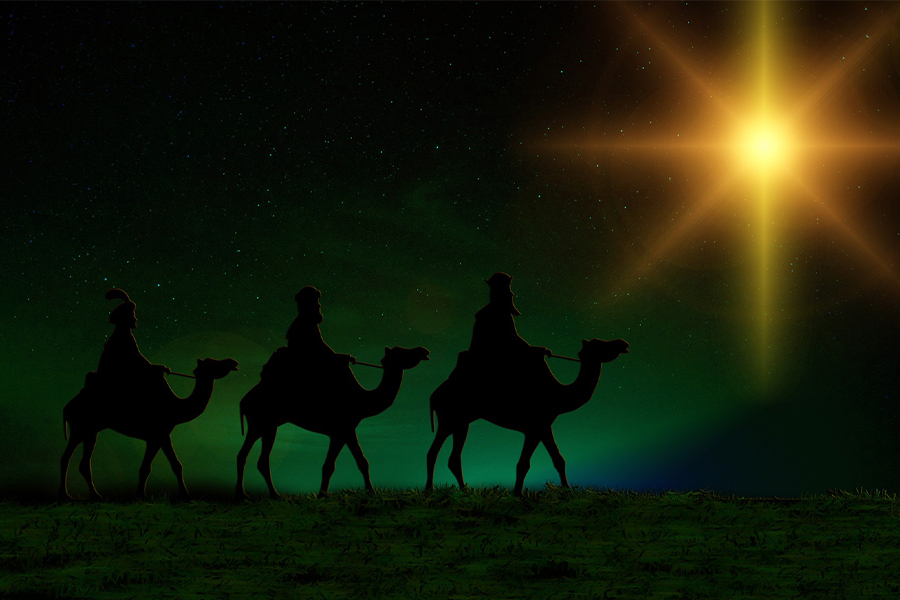
Stay Awake!
11-30-2025Weekly ReflectionWe Celebrate Worship Resource, Vol. 49, No. 1Each Advent, we are reminded that Jesus comes into the world in a variety of ways at different times. The music and decorations remind us of Jesus' first coming-as an infant lying in a manger. The joyous event is foreseen by Isaiah in today's first reading. The prophet speaks of people from every nation gathering on the Lord's mountain, reforging their weapons of war into tools of farming and cultivating.
Jesus himself describes his second coming in the Gospel, warning his disciples that the time will be unknown, leading to some being ready while others are not. Saint Paul passes along much the same warning to the Romans, but it is his own story that points toward another coming of Jesus that we mark during Advent: Jesus coming into our hearts. As with his second coming, we cannot anticipate when it will happen.
As with his first coming, he brings joy and peace when he comes. Importantly, each time he comes he bring us something no one else can: salvation. Every day, every hour, let us welcome our Savior. Then we truly can go rejoicing to the house of the Lord.
What will you do to ensure that you will be ready for each arrival of Christ in your life?
-We Celebrate Worship Resource, Vol. 51, No. 1
¡estén Despiertos!
Cada Adviento, recordamos que Jesus viene al mundo de diversas maneras y en diferentes momentos. La musica y la decoración nos recuerdan su primera venida: como un nino en un pesebre. Isaías predice este gozoso acontecimiento en la primera lectura de hoy. El profeta habla de gente de todas las naciones que se reune en el monte del Senor, transformando sus armas de guerra en herramientas para la agricultura.
El mismo Jesús describe su segunda venida en el Evangelio, advirtiendo a sus discípulos que el momento será desconocido, lo que hará que algunos estén preparados y otros no. San Pablo transmite una advertencia similar a los Romanos, pero es su propia historia la que apunta a otra venida de Jesús que celebramos durante el Adviento: la venida de Jesus a nuestros corazones. Al igual que con su segunda venida, no podemos anticipar cuándo ocurrirá.
Al igual que con su primera venida, trae alegría y paz cuando viene. Y lo más importante, cada vez que viene nos trae algo que nadie más puede: la salvacion. Cada día, cada hora, demos la bienvenida a nuestro Salvador. Entonces sí podremos ir gozosos a la casa del Señor.
¿Qué harás para asegurarte de estar preparado para cada llegada de Cristo a tu vida?
-We Celebrate Worship Resource, Vol. 51, No. 1
A King Above All
11-23-2025Question of the WeekReading I 2 Samuel 5:1-3 . David anointed king
Reading II Colossians 1:12-20 . Christ is before and above all things
Gospel Luke 23:35-43 . The crucified king
Key Passage: The soldiers also mocked him, ... saying, "If you are the King of the Jews, save yourself!" There was also an inscription over him, "This is the King of the Jews." (Luke 23:36-38)
Adult: In what ways is Jesus the ruler of your life?
Kids: How can you show that you honor Jesus as the king of your life?
Un Rey Sobre Todo
Lectura I 2 Samuel 5:1-3 . David ungido rey
Lectura II Colosenses 1:12-20 . Cristo esta antes y por encima de todo
Evangelio Lucas 23:35-43 . El rey crucificado
Pasaje clave: Los soldados también se burlaban de él, diciendo: "Si eres el Rey de los judíos, isálvate a ti mismo!". Había tambien una inscripcion sobre el: "Este es el Rey de los judíos". (Lucas 23:36-38)
Adultos: ¿De qué maneras gobierna Jesús tu vida?
Niños: ¿Como pueden demostrar que honran a Jesús como el rey de su vida?

Jesus, Remember Me...
11-23-2025Weekly ReflectionWe Celebrate Worship Resource, Vol. 49, No. 1Way back in March, on the first Sunday of Lent, we heard the Gospel passage in which Jesus prepared for his mission by spending forty days in the desert, where the devil tempted him three times. After failing twice, the devil led Jesus to the highest point in Jerusalem and said, "If you are the Son of God, throw yourself down from here" (Luke 4:9). As we hear today, while nailed to a cross high above the crowd on the hill of Golgotha, Jesus is tempted three more times with nearly the same words.
The rulers, the soldiers, and one of the criminals can't imagine anyone, let alone a king, who wouldn't do whatever he could to save his own life. Out of spite or ignorance, or in the criminal's case, selfishness, each misunderstands Jesus' mission. Jesus did not come to save us from pain or suffering or to rid the world of sin or evil. No, he came to offer love and mercy and forgiveness and the opportunity to follow him to a kingdom made just for us to dwell in eternally.
This is what the other criminal humbly asks for, and he receives it all, immediately and unconditionally. He alone recognized Jesus' innocence and his own sinfulness and seeks not that his own life be saved, but rather for life in the kingdom for which this unregal king is willing to die. Who are you willing to forgive this week, in imitation of the Lord, sowing the seeds of the kingdom and bringing a sort of paradise to someone else's heart?
-We Celebrate Worship Resource, Vol. 50, No. 3
Señor, Acuérdate De Mí
En marzo, en el primer domingo de Cuaresma, escuchamos el pasaje del Evangelio en el que Jesús se preparó para su misión pasando cuarenta días en el desierto, donde el diablo lo tentó tres veces. Tras dos intentos fallidos, el diablo lo llevó al punto más alto de Jerusalén y le dijo: "Si eres el Hijo de Dios, tírate de aquí abajo" (Lucas 4:9). Hoy escuchamos que, clavado en una cruz en lo alto del monte Gólgota, Jesús es tentado tres veces más con palabras casi idénticas.
Los gobernantes, los soldados y uno de los criminales no pueden imaginar a nadie, y mucho menos a un rey, que no haría lo posible por salvar su vida. Por rencor, ignorancia o, en el caso del criminal, por egoísmo, todos malinterpretan la misión de Jesús. Jesús no vino a salvarnos del dolor ni del sufrimiento, ni a librar al mundo del pecado ni del mal. No, el vino a ofrecer amor, misericordia, perdón y la oportunidad de seguirlo a un reino creado especialmente para nosotros, donde moraremos eternamente.
Esto es lo que el otro criminal pide humildemente, y lo recibe todo, de inmediato e incondicionalmente. Solo él reconoció la inocencia de Jesús y su propia pecaminosidad, y no busca salvar su propia vida, sino la vida en el reino por el cual este rey, esta dispuesto a morir. ¿A quién estás dispuesto a perdonar esta semana, imitando al Señor, sembrando las semillas del reino y llevando una especie de paraíso al corazón de otra persona?
-We Celebrate Worship Resource, Vol. 50, No. 3
Overcoming Difficulties
11-16-2025Question of the WeekReading I Malachi 3:19-20a · Messenger of the covenant
Reading II 2 Thessalonians 3:7-12 . Qualifications of various ministers
Gospel Luke 21:5-19 . The cataclysm to come
Key Passage: Jesus said, "You will be hated by all because of my name. But not a hair of your head will perish. By your endurance you will gain your souls." (Luke 21:17-19)
Adult: When bad things happen, how do you deal with them?
Kids: Have you ever worried about something that might happen? What can help you worry less?
Superando las Dificultades
Lectura I Malaquías 3:19-20a Mensajero del pacto
Lectura II 2 Tesalonicenses 3:7-12 Requisitos de los ministros
Evangelio Lucas 21:5-19 . El cataclismo venidero
Pasaje clave: Jesús dijo: "Todo el mundo los odiará por causa de mi nombre. Pero no se perderá ni un solo cabello de su cabeza. Si se mantienen firmes, se salvarán." (Lucas 21:17-19).
Adultos: Cuando suceden cosas malas, ¿como las afrontas?
Niños: ¿Alguna vez te has preocupado por algo que podría suceder? ¿Que puede ayudarte a preocuparte menos?

The Sun of Justice
11-16-2025Weekly ReflectionWe Celebrate Worship Resource, Vol. 49, No. 1The readings we hear today are downright frightening. They look ahead to the end of the world, and it is not pretty. Jesus and the prophets each warn of the horrors of that day. "All the proud and all evildoers will be stubble, and the day that is coming will set them on fire" (Malachi 3:19). "There will be powerful earthquakes, famines, and plagues ... they will seize and persecute you ... they will put some of you to death" (Luke 21:11, 12, 16). But even as we hear this, we can take comfort in the fact that we remain pilgrims of hope, no matter the trials and tribulations that will come.
Our hope is anchored in the Lord, who is the resurrection and the life. Yes, there will be pain and suffering. Sometimes it will be so strong and so pervasive and unyielding that it may seem that the end of the world has come. But no matter what, a new day always dawn, and "there will arise the sun of justice with its healing rays." (Malachi 3:20) To those who live justly, who live as Jesus' disciples, "not a hair on your head will be destroyed" (Luke 21:18). Just as each of these readings ends on a note of hope, so will the pilgrimage of our lives and the life of the world.
When have you felt that your world was collapsing or that the world was falling apart? What gave you hope?
-We Celebrate Worship Resource, Vol. 50, No. 3
El Sol de la Justicia
Las lecturas de hoy son realmente aterradoras. Nos hablan del fin del mundo, y el panorama es desolador. Jesús y los profetas advierten de los horrores de aquel día. "Todos los orgullosos y malhechores seran como paja, y el día que viene los consumirá" (Malaquías 3:19). "Habrá grandes terremotos, epidemias y hambres ... los apresaran y los perseguirán ... a algunos los matarán" (Lucas 21:11, 12, 16). Pero aun al escuchar esto, podemos consolarnos sabiendo que seguimos siendo peregrinos de esperanza, sin importar las pruebas y tribulaciones que nos aguardan.
Nuestra esperanza está anclada en el Señor, quien es la resurrección y la vida. Sí, habrá dolor y sufrimiento. A veces será tan intenso, tan omnipresente e implacable que parecera que el fin del mundo ha llegado. Pero pase lo que pase, siempre amanece un nuevo día, y "brillará el sol de justicia, que les traerá la salvación" (Malaquías 3:20). A quienes viven con justicia, a quienes viven como discípulos de Jesús, "ni un cabello de la cabeza se caerá" (Lucas 21:18). Así como cada una de estas lecturas termina con una nota de esperanza, así también lo hara la peregrinacion de nuestras vidas y la vida del mundo.
¿En que ocasiones has sentido que tu mundo se derrumbaba o que el mundo se desmoronaba? ¿Qué te dio esperanza?
-We Celebrate Worship Resource, Vol. 50, No. 3

Lateran Basilica
11-09-2025Weekly ReflectionWe Celebrate Worship Resource, Vol. 50, No. 3In today’s first reading, Ezekiel relates his vision of a remarkable temple, built in a restored Jerusalem. The water flowing from this temple miraculously makes salt water fresh. By his description, his audience knew he was speaking of the Dead Sea, whose toxic waters cannot support any life visible to the naked eye. But in Ezekiel’s vision, the temple’s water purifies this sea, enabling trees on its banks to grow and bear fruit, bringing life to what is literally called “dead”. His vision symbolizes a life-giving waters of baptism that flow from all churches. Those waters have certainly flowed from the Lateran Basilica, which was built in 324 CE—soon after Emperor Constantine legalized Christianity—and is regarded as the mother church of all churches in the world. In today’s Gospel, Jesus takes it one step further when he refers to his body as a temple, the dwelling place of God, which God will raise to new life in the Resurrection. Paul tells the church at Corinth that they are God’s building, for the Holy Spirit dwells in them. So too are we temples of God, dedicated in baptism to glorifying the Holy Spirit flowing out from us.
How can what you say and what you do bring life to those around you, like the life-giving waters that flow from the temple in Ezekiel’s vision?
Basilica de Letrán
En la primera lectura de hoy, Ezequiel relata su visión de un templo extraordinario, construido en una Jerusalén restaurada. El agua que fluye de este templo convierte milagrosamente el agua salada en agua dulce. Por su descripción, su audiencia sabía que hablaba del Mar Muerto, cuyas aguas tóxicas no pueden sustentar ninguna vida visible a simple vista. Pero en la visión de Ezequiel, el agua del templo purifica este mar, permitiendo que los árboles en sus orillas crezcan y den fruto, dando vida a lo que literalmente se llama "muerto". Su visión simboliza las aguas vivificantes del bautismo que fluyen de todas las iglesias. Ciertamente, esas aguas fluyeron de la Basílica de Letrán, construida en el año 324 d. C., poco después de que el emperador Constantino legalizara el cristianismo, y considerada la iglesia madre de todas las iglesias del mundo. En la lectura de hoy, Jesús va un paso más allá al referirse a su cuerpo como un templo, la morada de Dios, que Dios resucitará a una nueva vida en la Resurrección. Pablo les dice a los corintios que son edificio de Dios, porque el Espíritu Santo habita en ellos. Así también nosotros somos templos de Dios, consagrados en el bautismo a glorificar al Espíritu Santo que emana de nosotros.
¿Cómo pueden tus palabras y acciones dar vida a quienes te rodean, como las aguas vivificantes que fluyen del templo en la visión de Ezequiel?
God's House
11-09-2025Question of the WeekReading I Ezekiel 47:1-2, 8-9, 12 – The Wonderful Stream
Reading II 1 Corinthians 3:9c-11, 16-17 – You Are God’s Temple
Gospel John 2:13-22 – Cleansing of the Temple
Key Passage: ““Do you not know that you are the temple of God, and the Spirit of God dwells in you?” (1 Corinthians 16)
Adult: In what ways can you better honor and care for your body, God’s holy temple?
Kids: How can you take good care of your body, since it is God’s house?
La Casa de Dios
Lectura I Ezequiel 47:1-2, 8-9, 12 – El arroyo maravilloso
Lectura II 1 Corintios 3:9c-11, 16-17 – Ustedes son el templo de Dios
Evangelio Juan 2:13-22 – La purificación del templo
Pasaje clave: “¿No saben acaso ustedes que son el templo de Dios y que el Espíritu de Dios habita en ustedes?” (1 Corintios 16)
Adultos: ¿De qué maneras puedes honrar y cuidar mejor tu cuerpo, el santo templo de Dios?
Niños: ¿Cómo puedes cuidar bien tu cuerpo, ya que es la casa de Dios?
All Souls
11-02-2025Question of the WeekReading I Wisdom 3:1-9 . The Souls of the Just
Reading II Romans 5:5-11 . Christ's Death for Us
Gospel Matthew 5:1-12a . Eternal Life
Key Passage: "For this is the will of the Father, that everyone who sees the Son and believes in him may have eternal life, and I shall raise him up on the last day." (John 6:40)
Adult: How have those you have known who have died taught you how to live a holy life?
Kids: How can those who died help us learn to be more like Jesus? Ask an adult to tell you stories of someone they knew.
Todos los Fieles Difuntos
Lectura I Sabiduría 3:1-9 . Las almas de los justos
Lectura II Romanos 5:5-11 . La muerte de Cristo por nosotros
Evangelio Mateo 5:1-12a · Vida eterna
Pasaje clave: "Porque esta es la voluntad del Padre: que todo aquel que ve al Hijo y cree en él, tenga vida eterna, y yo lo resucitaré en el día postrero." (Juan 6:40)
Adultos: ¿Cómo te han enseñado a vivir una vida santa aquellos que has conocido que han fallecido?
Niños: ¿Cómo pueden los que han fallecido ayudarnos a aprender a ser más como Jesús? Pide a un adulto que te cuente historias de alguien que haya conocido.

Hope Does Not Disappoint
11-02-2025Weekly ReflectionWe Celebrate Worship Resource, Vol. 49, No. 1On this day when we remember in a special way all those who have died, let us also reflect on the theme of this Jubilee Year: Pilgrims of Hope. Our lives are a pilgrimage and because of our faith in a God who loves us, forgives us, and saved us, we are able to remain ever hopeful; for ourselves and for all.
We are hopeful because we believe that our pilgrimage through life does not end in death but in eternal life with the Lord. To those who cannot see past this life here on earth, death is truly an "affliction," an "utter destruction" (Wisdom 3:2-3). Though we surely grieve at the passing of loved ones, for we feel a tremendous sense of loss, we console each other with our trust that God has prepared a home for our loved ones and for us and will raise us all on the last day.
This gives us hope, precious hope, which "does not disappoint" (Romans 5:5). We do not know, we cannot know, what the future holds for us, but our hope in eternal life in God's kingdom can reassure us as we struggle through the tragedies and hardships of life, particularly the suffering and grief that come with death itself.
How does hope help you cope with pain, suffering, and grief?
-We Celebrate Worship Resource, Vol. 50, No. 3
La Esperanza No Desilusiona
En este día, en que recordamos de manera especial a todos los fallecidos, reflexionemos tambien sobre el tema de este Año Jubilar: Peregrinos de la Esperanza. Nuestras vidas son una peregrinación y, gracias a nuestra fe en un Dios que nos ama, nos perdona y nos salva, podemos mantener siempre la esperanza; por nosotros mismos y por todos.
Tenemos esperanza porque creemos que nuestro peregrinar por la vida no termina en la muerte, sino en la vida eterna con el Señor. Para quienes no pueden ver más allá de esta vida terrenal, la muerte es una verdadera "aflicción", una "perdición total" (Sabiduría 3:2-3). Aunque sin duda lamentamos la pérdida de seres queridos, pues sentimos una tremenda sensación de pérdida, nos consolamos mutuamente con la confianza de que Dios ha preparado un hogar para nuestros seres queridos y para nosotros, y que nos resucitará a todos en el último día.
Esto nos da esperanza, una preciosa esperanza que "no defrauda" (Romanos 5:5). No sabemos, no podemos saber, qué nos depara el futuro, pero nuestra esperanza en la vida eterna en el reino de Dios puede tranquilizarnos mientras luchamos contra las tragedias y dificultades de la vida, particularmente el sufrimiento y el dolor que vienen con la muerte misma.
¿Cómo ayuda la esperanza a afrontar el dolor, el sufrimiento y la pena?
-We Celebrate Worship Resource, Vol. 50, No. 3