St. Francis of Assisi Weekly Reflections

Bringing Mercy to Those in Need
04-27-2025Weekly ReflectionWe Celebrate Worship Resource, Vol. 49, No. 1It’s only natural to focus on Thomas when hearing today’s Gospel. After all, he plays a central role.
Alone among the apostles to be absent when Jesus comes the first time, he insists that he will not believe until he sees for himself.
But let’s shift the focus to Jesus for a moment. He notices that Thomas was not there the first time. It was not the first time that some of His disciples had missed something, but Jesus realizes how important it is for Thomas to witness His risen self in person. He returns to the upper room for only this reason.
Notice that after offering them all peace, which He had already done the first time, Jesus doesn’t address the other disciples at all. He immediately turns His attention to Thomas, demonstrating that His visit to the disciples collectively was really a mission of mercy to Thomas individually.
The Good Shepherd that He is, He turns His attention from the other sheep to pursue the lost sheep, to comfort him, and to bring him back to the flock.
On Divine Mercy Sunday, Jesus shows us the importance of going out of our way to bring mercy to those who need it.
Whom do you know in need of mercy specifically from you? How will you go about delivering it?
—We Celebrate Worship Resource, Vol. 50, No.1
Llevando Misericordia a Los Necesitados
Es natural centrarse en Tomás al escuchar el Evangelio de hoy. Después de todo, él desempeña un papel central.
Siendo el único de los apóstoles ausente cuando Jesús viene por primera vez, insiste en que no creerá hasta verlo con sus propios ojos.
Pero centrémonos en Jesús por un momento. Él observa que Tomás no estaba allí la primera vez. No era la primera vez que algunos de sus discípulos se perdían algo, pero Jesús comprende lo importante que es para Tomás presenciar su resurrección en persona.
Regresa al aposento alto solo por este motivo. Observen que, después de ofrecerles paz a todos, como ya había hecho la primera vez, Jesús no se dirige a los demás discípulos.
Inmediatamente dirige su atención a Tomás, demostrando que su visita colectiva a los discípulos era en realidad una misión de misericordia para Tomás individualmente.
Como Buen Pastor que es, desvía su atención de las otras ovejas para buscar a la oveja perdida, consolarla y traerla de vuelta al rebaño.
En el Domingo de la Divina Misericordia, Jesús nos muestra la importancia de salir de nuestro camino para llevar misericordia a quienes la necesitan.
¿A quién conoces que necesite tu misericordia? ¿Cómo se la brindarás?
—We Celebrate Worship Resource, Vol. 50, No.1

The Hope of the Resurrection
04-20-2025Weekly ReflectionWe Celebrate Worship Resource, Vol. 49, No. 1When we last saw Peter, he was beside himself, weeping after realizing that he had sinned just as Jesus had foretold. Today, we see Peter as just the opposite: bravely testifying to Jesus’ resurrection in the first reading and boldly entering the empty tomb in the Gospel when no one else dared. The cowardice Peter showed while Jesus was crucified has been transformed into courage.
When Jesus is raised from the dead, His own life is transformed, and the lives of all His disciples are also transformed. No longer does life end forever in death. Even that first Easter morning, His disciples realize that there is something imperceptible beyond the tomb, and Jesus has led the way. Eventually, they understand that this something is resurrection and new life.
This jubilee year, we recognize that in this life, we, Jesus’ disciples, are pilgrims of hope. We place our hope in the Lord, who is the Resurrection and the Life, who died to redeem us from our sins, from our weaknesses, from our brokenness, and who rose from the dead to lead the way to eternal life with God. This ultimate hope in life everlasting is our anchor, giving us the confidence that our journey through life will not end with the cross, or in the tomb, but in the Resurrection.
How does your hope in the Resurrection enable you to accept the crosses you bear?
We Celebrate Worship Resource, Vol. 50, No. 1.
La Esperanza de la Resurección
La última vez que vimos a Pedro, estaba fuera de sí, llorando al darse cuenta de que había pecado, tal como Jesús lo había predicho. Hoy vemos a Pedro en la situación opuesta: dando testimonio valiente de la resurrección de Jesús en la primera lectura, entrando con valentía en la tumba vacía en el Evangelio cuando nadie más se atrevió. La cobardía que Pedro mostró mientras Jesús fue crucificado se transformó en valentía.
Cuando Jesús resucitó de entre los muertos, su propia vida se transformó, y las mentiras de todos sus discípulos también. La vida ya no termina para siempre en la muerte. Incluso en aquella primera mañana de Pascua, sus discípulos se dieron cuenta de que había algo imperceptible más allá de la tumba, y Jesús les había mostrado el camino. Finalmente, comprendieron que ese algo era la resurrección y la nueva vida.
En este año jubilar, reconocemos que en esta vida, nosotros, los discípulos de Jesús, somos peregrinos de esperanza. Ponemos nuestra esperanza en el Señor, que es la resurrección y la Vida, que murió para redimirnos de nuestros pecados, de nuestras debilidades, de nuestra fragilidad, y que resucitó de entre los muertos para guiarnos hacia la vida eterna con Dios. Esta esperanza última en la vida eterna es nuestra ancla, dándonos la confianza de que nuestro viaje a través de la vida no terminará en la cruz o en la tumba, sino en la Resurrección.
¿Cómo te permite tu esperanza en la Resurrección aceptar las cruces que llevas?
We Celebrate Worship Resource, Vol. 50, No. 1
Made New by Christ
04-20-2025Question of the WeekReading I Acts 10:34a, 37-43 • Peter’s discourse
Reading II Colossians 3:1-4 • My mystical death and resurrection
Gospel John 20:1-9 • Peter and the disciple at the tomb
Key Passage Clean out the old yeast so that you may be a new batch, as you really are unleavened. For our paschal lamb, Christ, has been sacrificed. (1 Corinthians 5:7)
Adults: What change could the hope of the resurrection of Christ inspire you to make?
Kids: What bad habit would you like to “clear out” during the hopeful time of this Easter season?
Hechos Nuevos Por Cristo
Lectura I Hechos 10:34a, 37-43 • Discurso de Pedro
Lectura II Colosenses 3:1-4 • Muerte y Resurrección mística
Evangelio Juan 20:1-9 • Pedro y el discípulo en el sepulcro
Pasaje Clave Tiren la antigua levadura, para que sean ustedes una masa nueva, ya que son pan sin levadura, pues Cristo, nuestro cordero pascual, ha sido molido. (1 Corintios 5:7)
Adultos: ¿Qué cambio podría inspirarte la esperanza de la resurrección de Cristo?
Niños: ¿Qué mal hábito te gustaría abandonar durante la esperanza de esta Pascua?
Love and Betrayal
04-13-2025Question of the WeekReading I: Luke 19:28-40 Welcomed with palms
Reading II: Isaiah 50:4-7 Salvation only through the Lord’s servant
Gospel: Philippians 2:6-11 Jesus, compassionate high priest
Key Passage: “The Lord turned and looked at Peter. Then Peter remembered the word of the Lord, how he had said to him, ‘Before the cock crows today, you will deny me three times.’” (Luke 22:61)
For Adults: When have you felt that you betrayed the confidence of another, as Peter did when he denied Jesus?
For Kids: When have you let someone down who trusted you? How did you feel?
Amor Y Traición
Lectura I: Lucas 19:28-40 Recibidos con palmas
Lectura II: Isaías 50:4-7 Salvación solo a través del siervo del Señor
Evangelio: Filipenses 2:6-11 Jesús, sumo sacerdote compasivo
Pasaje Clave: "El Señor se volvió y miró a Pedro. Entonces Pedro recordó la palabra del Señor, que le había dicho: 'Antes de que el gallo cante hoy, me negarás tres veces.'" (Lucas 22:61)
Para Adultos: ¿Cuándo han sentido que traicionaron la confianza de alguien, como Pedro al negar a Jesús?
Para Niños: ¿Cuándo han decepcionado a alguien que confiaba en ustedes? ¿Cómo se sintieron?

When Have You Felt Abandoned?
04-13-2025Weekly ReflectionWe Celebrate Worship Resource, Vol. 49, No. 1“My God, my God, why have you abandoned me?” (Psalm 22:2) We sing this together in today’s psalm, echoing words that would not be out of place in today’s readings. Words that either Isaiah or Jesus could have said as they were persecuted, words that we may have said ourselves during our darkest times.
In today’s first reading, Isaiah tells us that he has been beaten, buffeted, and spat at as he calls the people out for their sinfulness. No one would blame him for accusing God of abandoning him after sending him to call his people to repentance. But instead, he insists that God is his help, saving him from shame and disgrace.
In the Passion, Jesus is abandoned by His closest friends. His disciples have fled. Peter is the only disciple who remains in the area, but he denies even knowing Him. None of them follow Him to the cross. But Jesus has prayed to the Father throughout His life and He prays to the Father throughout the Passion, in the end commending His spirit into God’s hands.
Like Isaiah and Jesus, we can trust that no matter how difficult our trials are and no matter how alone we may seem to be, God will never abandon us. God is always just a prayer away.
When have you felt abandoned? At those times, have you turned to God in prayer?
—WeCelebrate Worship Resource, Vol. 50, No. 1
¿cuándo Te Has Sentido Abandonado?
“Dios mío, Dios mío, ¿por qué me has abandonado?” (Salmo 22:2). Cantamos esto juntos en el salmo de hoy, haciendo eco de palabras que encajarían perfectamente en las lecturas de hoy. Palabras que Isaías o Jesús podrían haber dicho durante la persecución, palabras que quizás nosotros mismos hayamos dicho en nuestros momentos más difíciles.
En la primera lectura de hoy, Isaías nos cuenta que ha sido golpeado, abofeteado y escupido mientras reprende al pueblo por su pecado. Nadie lo culparía por acusar a Dios de abandonarlo después de enviarlo a llamar a su pueblo al arrepentimiento. Pero, en cambio, insiste en que Dios es su ayuda, salvándolo de la vergüenza y la desgracia.
En la Pasión, Jesús es abandonado por sus amigos más cercanos. Sus discípulos han huido. Pedro es el único discípulo que queda en la zona, pero niega siquiera conocerlo. Ninguno de ellos lo sigue hasta la cruz. Pero Jesús ha orado al Padre durante toda su vida y le ora durante toda la Pasión, encomendando finalmente su espíritu en las manos de Dios.
Al igual que Isaías y Jesús, podemos confiar en que, por difíciles que sean nuestras pruebas y por muy solos que parezcamos estar, Dios nunca nos abandonará. Dios siempre está a una sola oración de distancia.
¿Cuándo te has sentido abandonado? En esos momentos, ¿has recurrido a Dios en oración?
—WeCelebrate Worship Resource, Vol. 50, No. 1
False Pride
04-06-2025Question of the WeekReading I: Isaiah 43:16-21 – Promise of restoration
Reading II: Philippians 3:8-14 – Breaking with the past
Gospel: John 8:1-11 – The adulteress
Key Passage: Jesus straightened up and said, “Let anyone among you who is without sin be the first to throw a stone at her.” (John 8:7)
For Adults: Have you ever been too willing to “cast the first stone” when you disapproved of someone’s behavior? How can you resist these feelings?
For Kids: When have you criticized or made fun of someone? What could help you act differently?
Falso Orgullo
Lectura I: Isaías 43:16-21 • Promesa de restauración
Lectura II: Filipenses 3:8-14 • Romper con el pasado
Evangelio: Juan 8:1-11 • La adúltera
Pasaje Clave: Jesús se enderezó y dijo: “¿Quién de ustedes esté sin pecado, que tire la primera piedra” (Juan 8:7).
Para Adultos: ¿Alguna vez han estado demasiado dispuestos a tirar la primera piedra al desaprobar el comportamiento de alguien? ¿Cómo pueden resistir estos sentimientos?
Para Niños: ¿Cuándo han criticado o se han burlado de alguien? ¿Qué podría ayudarles a actuar de manera diferente?
Will You Be First to Throw the Stone?
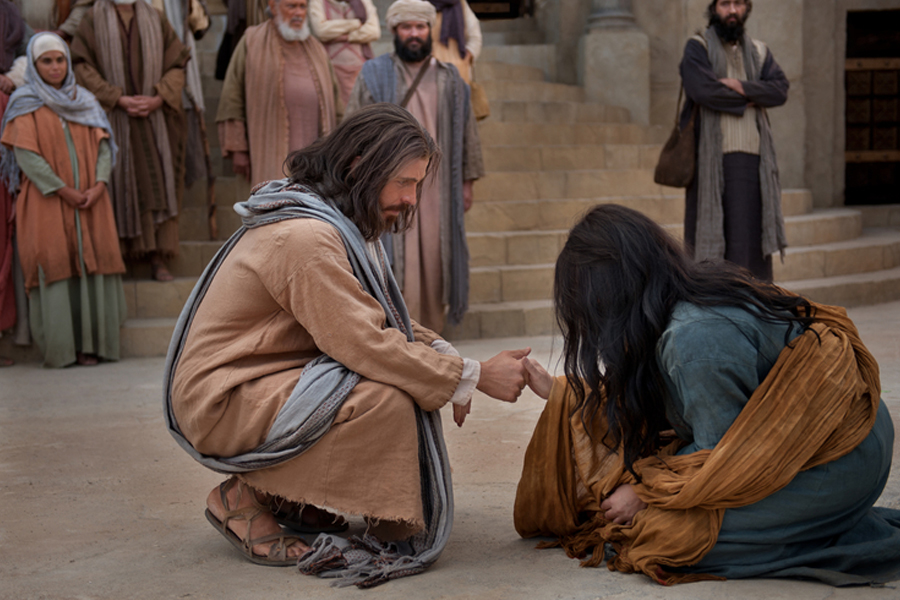
04-06-2025Weekly ReflectionWe Celebrate Worship Resource, Vol. 49, No. 1The woman in today’s Gospel isn’t given a name, only a sentence. The authorities who caught her in the act of adultery care no more about her name than about whether she lives or dies. They have already dehumanized her, dragging her (but not the man) out of bed and shaming her in the middle of a crowd. Now she is just a pawn to test Jesus’ fidelity to the law. They do not see a person; they see only her sin, and they are willing to let her pay for that sin with her life. Jesus, however, sees the person. He sees a sinner, not unlike the sinners He was accused in last week’s Gospel of eating with or the sinners He called as disciples.
By responding, “Let the one among you who is without sin be the first to throw a stone at her” (John 8:7), and then pausing to scribble in the dirt, He gives the authorities and the crowd the opportunity and the time to shift their thinking, to look at the person and not the sin, to realize that we are all sinners. When we get ready to judge someone by their worst sins, when we rush to condemn a sinner, may we recall this Gospel, see the person with the Lord’s eyes, and respond, as He always does, with mercy.
When do you tend to rush to judgment? How will you respond with mercy to someone you’ve previously judged by their sin?
—We Celebrate Worship Resource, Vol. 50, No. 1
¿seráselprimeroen Tirarlapiedra?
La mujer del Evangelio de hoy no recibe un nombre, solo una sentencia. A las autoridades que la sorprendieron en el acto de adulterio les da igual su nombre o si vive o muere. Ya la han deshumanizado, sacándola a ella (pero no al hombre) de la cama y avergonzándola en medio de una multitud. Ahora es solo un peón para probar la fidelidad de Jesús a la ley. No ven a una persona. Solo ven su pecado, y están dispuestos a dejar que pague por ese pecado con su vida. Jesús ve a la persona. Ve a un pecador, no muy diferente de los pecadores con los que, en el Evangelio de la semana pasada, se le acusó de comer o de los pecadores a los que llamó como discípulos.
Al responder: “El que esté libre de pecado, que tire la primera piedra” (Juan 8:7), y luego sentarse a escribir en la tierra, les da a las autoridades y a la multitud la oportunidad y el tiempo para cambiar de mentalidad, para mirar a la persona y no al pecado, para darse cuenta de que todos somos pecadores. Cuando nos dispongamos a juzgar a alguien por sus peores pecados, cuando nos apresuremos a condenar a un pecador, recordemos este Evangelio, veamos a la persona con los ojos del Señor y respondamos, como siempre lo hace, con misericordia.
¿En qué momentos tiendes a apresurarte a juzgar? ¿Cómo responderás con misericordia a alguien a quien ya has juzgado por su pecado?
—We Celebrate Worship Resource, Vol. 50, No. 1

Was Lost Now Is Found
03-30-2025Weekly ReflectionWe Celebrate Worship Resource, Vol. 49, No. 1“Your brother was dead and has come to life again” (Luke 15:32). Approaching Easter, the readings we hear testify that with God, the dead can be restored to life. The Chosen People, rescued from slavery, celebrate their new life in the promised land. Saint Paul tells the Corinthians that our old selves have passed away, for we have become a new creation in Christ.
Finally, we hear the well-known parable of the prodigal son, which concludes with the line above. When the younger son, inheritance squandered and dying of hunger, returns to his father, his father cannot contain his joy, reconciling with him at once. In a way, another person has been brought back to life in this parable, for by demanding his inheritance, the younger son was acting as if his father was already dead. Even when he came to his senses, he presumed he’d treat his father strictly as an employer, not as his father.
But with God, reconciliation can transform us, reuniting the estranged, rescuing the lost, restoring the dead to life. On this Laetare Sunday, let us rejoice in God’s power even over death.
With whom can you reconcile, restoring life to a difficult relationship?
—We Celebrate Worship Resource, Vol. 50, No. 1
Estaba Perdido Pero Lo Encontramos
“Tu hermano estaba muerto y ha vuelto a la vida” (Lucas 15:32). Al acercarse la Pascua, las lecturas que escuchamos dan testimonio de que, con Dios, los muertos pueden ser restaurados a la vida. El Pueblo Elegido, rescatado de la esclavitud, celebra su nueva vida en la tierra prometida. San Pablo les dice a los corintios que todo lo viejo ha pasado, pues nos hemos convertido en una nueva creación en Cristo.
Finalmente, escuchamos la conocida parábola del hijo pródigo, que concluye con la frase anterior. Cuando el hijo menor, habiendo malgastado su herencia y muriendo de hambre, regresa con su padre, este no puede contener su alegría y se reconcilia con él de inmediato. En cierto modo, otra persona ha vuelto a la vida en esta parábola, pues al exigir su herencia, el hijo menor actuaba como si su padre ya hubiera muerto. Incluso cuando recobró la cordura, presumió que trataría a su padre estrictamente como a un empleador, no como a su padre.
Pero con Dios, la reconciliación puede transformarnos, reuniendo a los distanciados, rescatando a los perdidos, devolviendo la vida a los muertos. En este Domingo de Laetare, celebremos el poder de Dios incluso sobre la muerte.
¿Con quién puedes reconciliarte, devolviendo la vida a una relación difícil?
—We Celebrate Worship Resource, Vol. 50, No. 1
A Generous Spirit
03-30-2025Question of the WeekReading I: Joshua 5:9a, 10-12 • Rites at Gilgal
Reading II: 2 Corinthians 5:17-21 • A new creation
Gospel: Luke 15:1-3, 11-32 • The prodigal son
Key Passage: "Then the father said to him, 'Son, you are always with me, and all that is mine is yours. But we had to celebrate and rejoice, because this brother of yours was dead and has come to life; he was lost and has been found.'” (Luke 15:31–32)
Adults: When have you been generous enough to forgive someone who hurt you deeply?
Kids: Is there someone you need to forgive or ask forgiveness of?
Un Espíritu Generoso
Lectura I: Josué 5:9a, 10-12 • Ritos en Gilgal
Lectura II: Corintios 5:17-21 • Una nueva creación
Evangelio: Lucas 15:1-3, 11-32 • El hijo pródigo
Pasaje Clave: "Entonces el padre le dijo: «Hijo, tú siempre estás conmigo, y todas mis cosas son tuyas. Pero era necesario hacer fiesta y regocijarnos, porque este hermano tuyo estaba muerto y ha vuelto a la vida; estaba perdido y ha sido encontrado.»" (Lucas 15:31-32)
Adultos: ¿Cuándo han sido lo suficientemente generosos como para perdonar a alguien que los lastimó profundamente?
Niños: ¿Hay alguien a quien necesiten perdonar o a quien pedir perdón?

How Will You Bear Fruit?
03-23-2025Weekly ReflectionWe Celebrate Worship Resource, Vol. 49, No. 1A warning: The parable we hear today leaves us hanging. A gardener pleads for mercy when ordered to cut down a barren fig tree. Leave it one more year, he asks the owner, and he will give it special attention on. Then maybe it will bear fruit. If not, then the owner can cut it down. The end. What happens next? Does the tree bear fruit or not? Does it get cut down or is it spared?
Evidently what happens to the tree after the tender loving care is not the point. The point must simply be the extra opportunity the tree had to flourish. Before telling this parable, Jesus spoke of people who had died suddenly and tragically. He encouraged his listeners to repent. Unlike those who had been killed, they still had the opportunity to do so.
Now it is our turn. It is not too late. We can still repent. We can still turn our lives around. We can still bear fruit. We can still make this season of repentance a time to follow Jesus more closely through prayer, fasting, and giving alms.
God has given us this opportunity. Let us make the most of it. What do you repent of this Lent? How will you bear fruit?
—We Celebrate Worship Resource, Vol. 50, No. 1
¿Cómo darás fruto?
U na advertencia: La parábola que escuchamos hoy nos deja en suspenso. Un jardinero pide misericordia cuando se le ordena cortar una higuera estéril. Déjala un año más, le pide al dueño, y él le dará especial atención. Entonces tal vez dé fruto. Si no, entonces el dueño puede cortarla. Fin. ¿Qué pasa después? ¿El árbol da fruto o no? ¿Se corta o se le perdona?
Evidentemente, lo que le sucede al árbol después del erno cuidado amoroso no es el punto. El punto debe ser simplemente la oportunidad adicional que el árbol tuvo para florecer. Antes de contar esta parábola, Jesús habló de personas que habían muerto repen na y trágicamente. Animó a sus oyentes a arrepen rse. A diferencia de los que habían sido asesinados, ellos todavía tenían la oportunidad de
hacerlo. Ahora es nuestro turno. No es demasiado tarde. Todavía podemos arrepen rnos. Todavía podemos cambiar nuestras vidas. Todavía podemos dar fruto. Todavía podemos hacer de este empo de arrepenmiento un empo para seguir a Jesús más de cerca a través de la oración, el ayuno y la limosna.
Dios nos ha dado esta oportunidad. Aprovechémoslo al máximo. ¿De qué te arrepientes en esta Cuaresma? ¿Cómo darás fruto?
—We Celebrate Worship Resource, Vol. 50, No. 1
Tempered with Humility
03-23-2025Question of the WeekReading I Exodus 3:1-8a, 13-15 • The call of Moses
Reading II 1 Corinthians 10:1-6, 10-12 • Against overconfidence
Gospel Luke 13:1-9 • Calls to penance; parables of the Reign of God
Key Passage The reign of God is like a mustard seed that someone took and sowed in the garden; it grew and became a tree, and the birds of the air made nests in its branches.(Lk.v13:19b)
Adults: What important work could bear fruit in your life right now if you have more confidence in God’s loving care?
Kids: What great work would you like to do as you grow?
Templado con Humilidad
Lectura I Éxodo 3:1-8a, 13-15 • El llamado de Moisés
Lectura II 1 Corin os 10:1-6, 10-12 • Contra el exceso de confianza
Evangelio Lucas 13:1-9 • Llamados a la penitencia; parábolas del Reino de Dios El reino de Dios
Pasaje Clave El reino de Dios es como un grano de mostaza que alguien tomó y sembró en el jardín; creció y se convir ó en un árbol, y las aves del cielo anidaron en sus ramas. (Lc.v13:19b)
Adultos: ¿Qué trabajo importante podría dar fruto en tu vida ahora mismo si tuvieras más confianza en el cuidado amoroso de Dios? Niños: ¿Qué gran trabajo te gustaría hacer a medida que creces?
Niños: ¿Qué gran trabajo te gustaría hacer a medida que creces?

Carrying Our Cross
03-16-2025Weekly ReflectionWe Celebrate Worship Resource, Vol. 49, No. 1Master teacher that he is, Jesus knows to follow up a difficult lesson with something positive. Just before this Gospel, he told his disciples that he would be put to death on a cross and that they too must deny themselves, take up their crosses, and follow him.
So now, a few days later, he brings his three closest disciples up the mountain to pray, to accompany him into the presence of God. On that mountain, he is transfigured, transformed in appearance—not into the condemned One with nail marks in his hands and feet, but into the glorified One with dazzling garments in the company of God’s chosen.
The three then hear God’s voice: “This is my chosen Son; listen to him” (Luke 9:35). He told you he would be put to death. Listen to him. He told you to carry your cross. Listen to him. He told you to follow him. Listen to him.
Soon everyone would see him suffer and die, nailed to a cross high above Jerusalem. But only those with eyes of faith would later see him in his glorified body, continuing to reveal the kingdom with his presence.
Today, with our true citizenship in heaven, as Paul would say, we are called to see with eyes of faith, so that we too may see that in carrying our cross we will be transfigured in glory.
What cross are you carrying now that affects you the most?
—We Celebrate Worship Resource, Vol. 50, No. 1
Llevando Nuestra Cruz
Jesús, maestro de maestros, sabe que después de una lección difícil hay que darle algo positivo. Justo antes de este Evangelio, les dijo a sus discípulos que lo iban a condenar a muerte en una cruz y que ellos también debían negarse a sí mismos, tomar su cruz y seguirlo.
Así que ahora, unos días después, lleva a sus tres discípulos más cercanos a la montaña para orar, para acompañarlo a la presencia de Dios. En esa montaña se transfigura, se transforma en apariencia, no en el condenado con marcas de clavos en sus manos y pies, sino en el glorificado con vestiduras deslumbrantes en compañía de los elegidos de Dios.
Los tres escuchan entonces la voz de Dios: «Éste es mi Hijo elegido; escúchenlo» (Lucas 9:35). Él les dijo que lo condenarían a muerte. Escúchenlo. Él les dijo que llevaran su cruz. Escúchenlo. Él les dijo que lo siguieran. Escúchenlo.
Pronto todos lo verían sufrir y morir, clavado en una cruz en lo alto de Jerusalén. Pero sólo aquellos con ojos de fe lo verían después en su cuerpo glorioso, continuando con su presencia la revelación del reino.
Hoy, con nuestra verdadera ciudadanía en el cielo, como diría Pablo, estamos llamados a ver con ojos de fe, para que también nosotros podamos ver que al llevar nuestra cruz seremos transfigurados en la gloria.
¿Qué cruz estás cargando ahora mismo que te afecta más? —We Celebrate Worship Resource, Vol. 50, No. 1
Transformed by Christ
03-16-2025Question of the WeekReading I Genesis 15:5-12, 17-18 • The covenant with Abram
Reading II Philippians 3:17–4:1 • Christ our goal
Gospel Luke 9:28b-36 • Jesus transfigured
Key Passage "But our citizenship is in heaven, and it is from there that we are expecting a Savior, the Lord Jesus Christ." (Philippians 3:20)
Reflection Questions for Adults and Kids:
Adults: How are your priorities affected by your faith in Jesus Christ?
Kids: When you have important choices to make, do you and your family pray to make the right choice?
Transformados por Cristo
Lectura I Génesis 15:5-12, 17-18 • El pacto con Abram
Lectura II Filipenses 3:17–4:1 • Cristo, nuestra meta
Evangelio Lucas 9:28b-36 • Jesús transfigurado
Pasaje Clave "Pero nosotros somos ciudadanos del cielo, y de allí esperamos al Salvador, el Señor Jesucristo." (Filipenses 3:20)
Preguntas de Reflexión para Adultos y Niños:
Adultos: ¿Cómo se ven afectadas sus prioridades por su fe en Jesucristo?
Niños: Cuando tienen que tomar decisiones importantes, ¿ustedes y su familia oran para tomar la decisión correcta?
Salvation Through Faith
03-09-2025Question of the WeekReading I: Deuteronomy 26:4-10 – Thanksgiving for the Lord’s goodness
Reading II: Romans 10:8-13 – The faith of the Christian
Gospel Key Passage: Luke 4:1-13 – Temptation in the desert
"For everyone who calls on the name of the Lord shall be saved." (Romans 10:13)
Reflection Questions:
Adults: How willing are you to profess your faith in Jesus Christ openly to others?
Kids: Would you still be able to say that you believe in Jesus if others made fun of you for it?
Salvación Por Medio De La Fe
Lectura I: Deuteronomio 26:4-10 – Acción de gracias por la bondad del Señor
Lectura II: Romanos 10:8-13 – La fe del cristiano
Evangelio Pasaje Clave: Lucas 4:1-13 – Tentación en el desierto
"Porque todo aquel que invoque el nombre del Señor será salvo." (Romanos 10:13)
Preguntas para Reflexionar:
Adultos: ¿Qué tan dispuestos están a profesar su fe en Jesucristo abiertamente a los demás?
Niños: ¿Aún podrían decir que creen en Jesús si otros se burlaran de ustedes por eso?

Resisting Temptation
03-09-2025Weekly ReflectionWe Celebrate Worship Resource, Vol. 49, No. 1On this First Sunday of Lent, we hear the devil tempt Jesus three times during his lengthy journey through the desert after he is baptized. Jesus resists each temptation, turning to the Father—specifically, God's word—to rebuke the devil. In Luke's version, the devil brings Jesus to Jerusalem for his final attempt, demanding that he throw himself down from a high point to prove that God will send angels to save him.
On the final Sunday of Lent, we will hear one of the thieves crucified with Jesus demand that, if he is the Son of God, he should throw himself down from the cross and save himself and them. Jesus will resist temptation then, as he does now, by remaining obedient to the Father.
We may feel it difficult to resist even everyday temptations in our own lives—and it often is—but we can rely on some of the same support that Jesus has. Note the first words of the Gospel: "Filled with the Holy Spirit" (Luke 4:1). The Holy Spirit came down upon us when we were baptized as well and now guides our consciences and strengthens our wills to turn away from temptation and act as God calls us to act.
How does realizing that you have the Holy Spirit within you help you to resist temptation?
-We Celebrate Worship Resource, Vol. 50, No. 1
Resistiendo La Tentacion
En este primer domingo de Cuaresma, oímos al diablo tentar a Jesús tres veces durante su largo viaje por el desierto después de ser bautizado. Jesús resiste cada tentación, recurriendo al Padre —específicamente, a la palabra de Dios— para reprender al diablo.
En la versión de Lucas, el diablo lleva a Jesús a Jerusalén para su último intento, exigiéndole que se arroje desde un punto alto para demostrar que Dios enviará ángeles para salvarlo.
En el último domingo de Cuaresma, oiremos a uno de los ladrones crucificados con Jesús exigir que, si es el Hijo de Dios, se arroje desde la cruz para salvarse a sí mismo y a ellos. Jesús resistirá la tentación entonces como lo hace ahora, permaneciendo obediente al Padre.
Puede que nos resulte difícil resistir incluso las tentaciones cotidianas en nuestras propias vidas, y a menudo lo es, pero podemos confiar en parte del mismo apoyo que tiene Jesús. Notemos las primeras palabras del Evangelio: “Lleno del Espíritu Santo” (Lucas 4:1). El Espíritu Santo descendió sobre nosotros también cuando fuimos bautizados, y ahora guía nuestras conciencias y fortalece nuestra voluntad para alejarnos de la tentación y actuar como Dios nos llama a actuar.
¿Cómo te ayuda a resistir la tentación el darte cuenta de que tienes al Espíritu Santo dentro de ti?
-We Celebrate Worship Resource, Vol. 50, No. 1
Authentic Living
03-02-2025Question of the WeekReading I: Sirach 27:5-8 • All tested by their speech
Reading II: 1 Corinthians 15:54-58 • Glorification of the Body
Gospel Key Passage: Luke 6:39-45 • All known by their works
Jesus said, “How can you say to your neighbor, ‘Friend, let me take out the speck in your eye,’ when you yourself do not see the log in your own eye?” (Lk. 6:42a)
Adults: When have you most felt like a hypocrite? How did you overcome this feeling? Kids: Is it a good thing or a bad thing to act differently from what you are really feeling? Why?
Vida Auténtica
Lectura I: Eclesiástico 27:5-8 • Todos probados por sus palabras
Lectura II: 1 Corintios 15:54-58 • Glorificación del Cuerpo
Evangelio Pasaje Clave: Lucas 6:39-45 • Todos conocidos por sus obras
Jesús dijo: “¿Cómo puedes decirle a tu prójimo: ‘Amigo, déjame sacarte la paja del ojo’, cuando tú mismo no ves la viga que está en el tuyo?” (Lucas 6:42a)
Adultos: ¿Cuándo te has sentido más hipócrita? ¿Cómo superaste este sentimiento? Niños: ¿Es bueno o malo actuar de manera diferente a lo que realmente sientes? ¿Por qué?
Seeing Clearly: A Lenten Reflection on Judgment and Goodness
03-02-2025Weekly ReflectionWe Celebrate Worship Resource, Vol. 49, No. 1Few of us have perfect, uncorrected 20/20 vision in each eye. So why do we assume that we have perfect, uncorrected “vision” of good and bad, of who’s at fault or who’s to blame? Today, Jesus presents a dramatic example of someone who is more concerned about a small splinter affecting someone else’s vision rather than a huge beam that’s blocking their own.
Finding fault with others while ignoring our own sins is very human. But Jesus calls us to a new way of seeing. Last week, He told us, “Do not judge and you will not be judged.” (Luke 6:37) And two weeks ago: “Blessed are you when people... insult... and denounce [you].” (Luke 6:22) We shouldn’t judge others, and we are blessed when others judge us unfairly. Let this be a timely lesson as we look toward Lent. It is far more important to overcome our own imperfections than to waste time judging or denouncing others.
Like the Corinthians, we can then devote ourselves to the work of the Lord, bearing good fruit out of the goodness that God nurtures in our hearts.
What will you do during Lent to stop focusing on what’s wrong in the world or in others and devote yourself to doing something fruitful instead?
— We Celebrate Worship Resource, Vol. 50, No. 1
Ver claro: Una reflexión cuaresmal sobre el juicio y la bondad
Pocos de nosotros tenemos una visión perfecta de 20/20 en cada ojo. Entonces, ¿por qué asumimos que tenemos una “visión” perfecta del bien y del mal, de quién tiene la culpa o quién es el culpable? Hoy, Jesús presenta un ejemplo dramático de alguien que está más preocupado por una pequeña astilla que afecta la visión de otra persona que por una gran viga que bloquea la suya.
Encontrar faltas en los demás mientras ignoramos nuestros propios pecados es muy humano. Pero Jesús nos llama a una nueva forma de ver. La semana pasada nos dijo: “No juzguen y no serán juzgados.” (Lucas 6:37) Y hace dos semanas: “Bienaventurados ustedes cuando la gente... los insulte ... y los denuncie” (Lucas 6:22). No debemos juzgar a los demás y somos bendecidos cuando otros nos juzgan injustamente. Que esta sea una lección oportuna mientras miramos hacia la Cuaresma. Es mucho más importante superar nuestras propias imperfecciones que perder el tiempo juzgando o denunciando a los demás.
Como los corintios, podemos entonces dedicarnos a la obra del Señor, dando buenos frutos de la bondad que Dios cultiva en nuestros corazones.
¿Qué harás durante la Cuaresma para dejar de centrarte en lo que está mal en el mundo o en los demás y dedicarte a hacer algo fructífero?
— We Celebrate Worship Resource, Vol. 50, No. 1